
Cats are full of surprises! Even the most experienced cat parents are often amazed by how unique and complex their feline companions truly are. Here are seven intriguing facts that reveal how special cats are — and why we admire them so much.
1. Whiskers Are More Than Just Cute – They’re a Cat’s Built-In Radar
A cat’s whiskers are highly sensitive and play a crucial role in helping them understand their surroundings.
Super Sensitive Sensors: Each whisker is connected to a bundle of nerves, allowing cats to detect movement, air vibrations, and nearby objects — even in the dark.
Navigation Tool: Whiskers help cats judge the size of openings and determine whether they can fit through tight spaces.
Supports Balance & Movement: Whiskers help cats maintain balance, especially when climbing, jumping, or walking on narrow edges.
Emotional Indicator: Cats communicate with their whiskers. Forward-facing whiskers show excitement or alertness, while whiskers pulled back indicate stress or fear.
In short: whiskers act like a GPS, balance tool, and emotional signal system — all in one!
2. All Kittens Start With Blue Eyes
Kittens are born with closed eyes, and once they open, their eyes appear blue.
This blue color is temporary and due to low melanin in the eye.
By 3–4 months of age, their true eye color develops — which may turn green, yellow, golden, or brown depending on genetics and breed.
No matter what color they end up with, every cat begins life with blue eyes!
3. Cats Have Three Blood Types: A, B, and AB
Just like humans, cats have different blood types.
Type A: The most common blood type, especially in mixed-breed cats.
Type B: Found more often in purebred cats such as Persians and British Shorthairs.
Type AB: The rarest blood type.
Knowing a cat’s blood type is important for medical reasons, especially if a blood transfusion is ever needed. An incorrect match can cause severe and life-threatening reactions. Blood typing is also essential when breeding, as incompatible types can put kittens at risk.
4. Most Orange Cats Are Male
Here’s a fun genetic secret: male orange cats are far more common than females.
A male cat can be orange if either parent carries the orange gene.
A female must inherit the orange gene from both parents to be orange.
Because of this genetic pattern, roughly 80% of orange cats are male.
5. Cats Don’t Have a Fully Developed Collarbone
Unlike humans, cats lack a rigid clavicle (collarbone).
This allows them to:
Move their shoulders freely
Squeeze through surprisingly small spaces
Jump and twist with incredible flexibility
This unique skeletal advantage contributes to their graceful movement, agility, and exceptional hunting ability.
6. Cats Can Produce Around 100 Different Sounds
Cats are far more expressive than most people realize — they can make almost 100 vocal sounds!
A few common ones include:
Meow: Usually directed at humans to communicate attention, wants, or greeting.
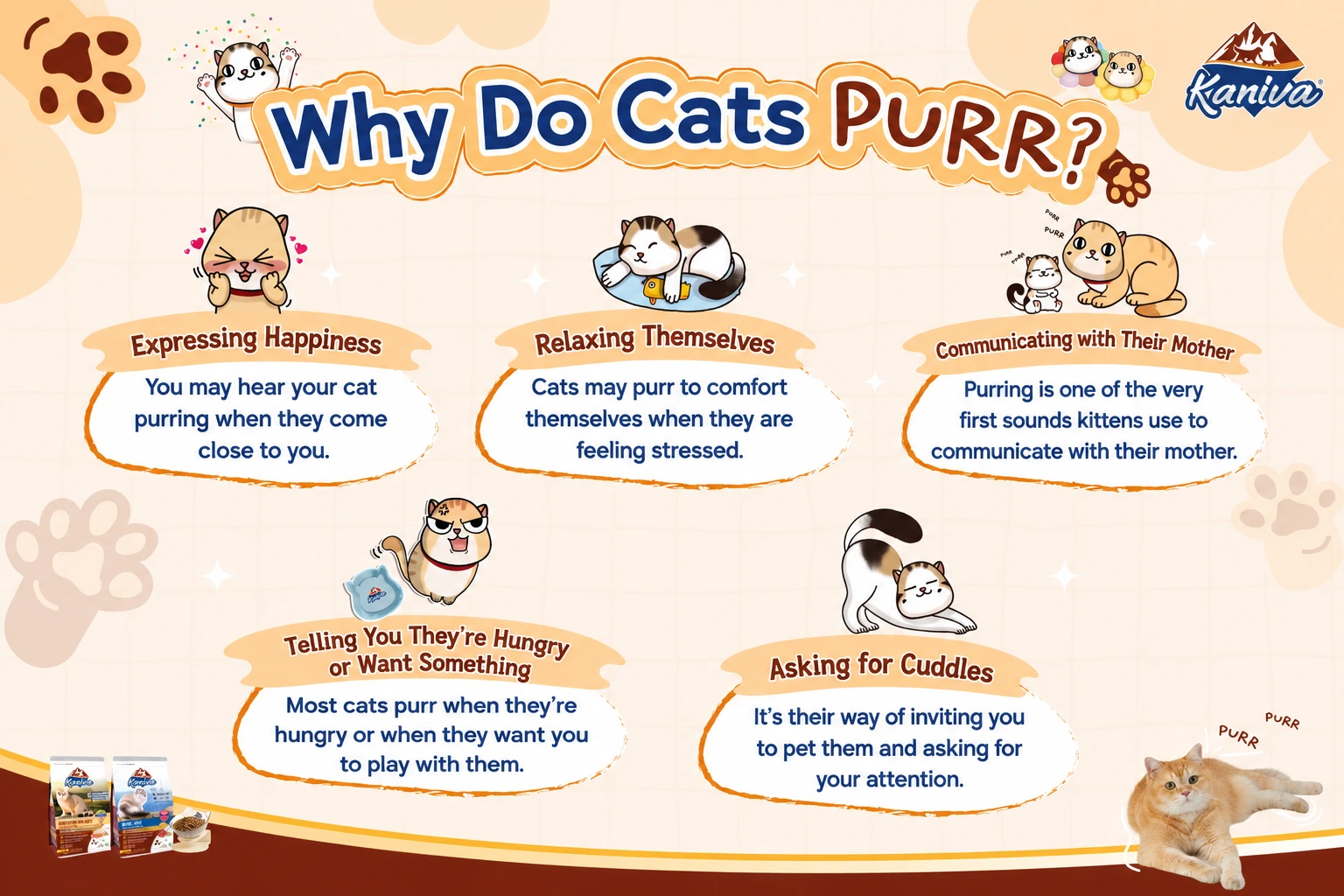
Purr: Often a sign of contentment, but can also be used for self-soothing when in pain or anxious.
Hiss & Growl: Defensive sounds to show fear, stress, or warning.
Chatter: Heard when watching birds or prey; linked to excitement or hunting instinct.
Yowl: Often used during mating, discomfort, or distress.
Trill: A friendly greeting or to get attention from their owner.
Cats adapt their voice depending on the situation — especially to “train” their humans!
7. Cats Have More Toes in Front Than in Back
Most cats don’t have the same number of toes on all paws:
Front paws: 5 toes each
Back paws: 4 toes each
The extra front toe, known as the dewclaw, helps cats grip objects, climb, and hold prey. Some cats are born with extra toes — a condition called polydactyl, which makes their paws look like little mittens.
Final Thoughts
Cats are extraordinary animals, full of hidden talents and surprising biology that help them survive, communicate, and thrive. The more we learn about them, the better we can understand and care for them as the incredible companions they are.