As a cat parent, you probably notice changes in your cat’s appetite, energy levels, or behavior. But one of the easiest ways to monitor your cat’s health is by checking the litter box.
The color of your cat’s poop can provide important clues about their digestive system and overall health. While occasional changes can happen because of diet or minor digestive upset, unusual stool colors that persist may indicate an underlying health issue that requires veterinary attention.
Here’s what different poop colors may mean and when you should be concerned.
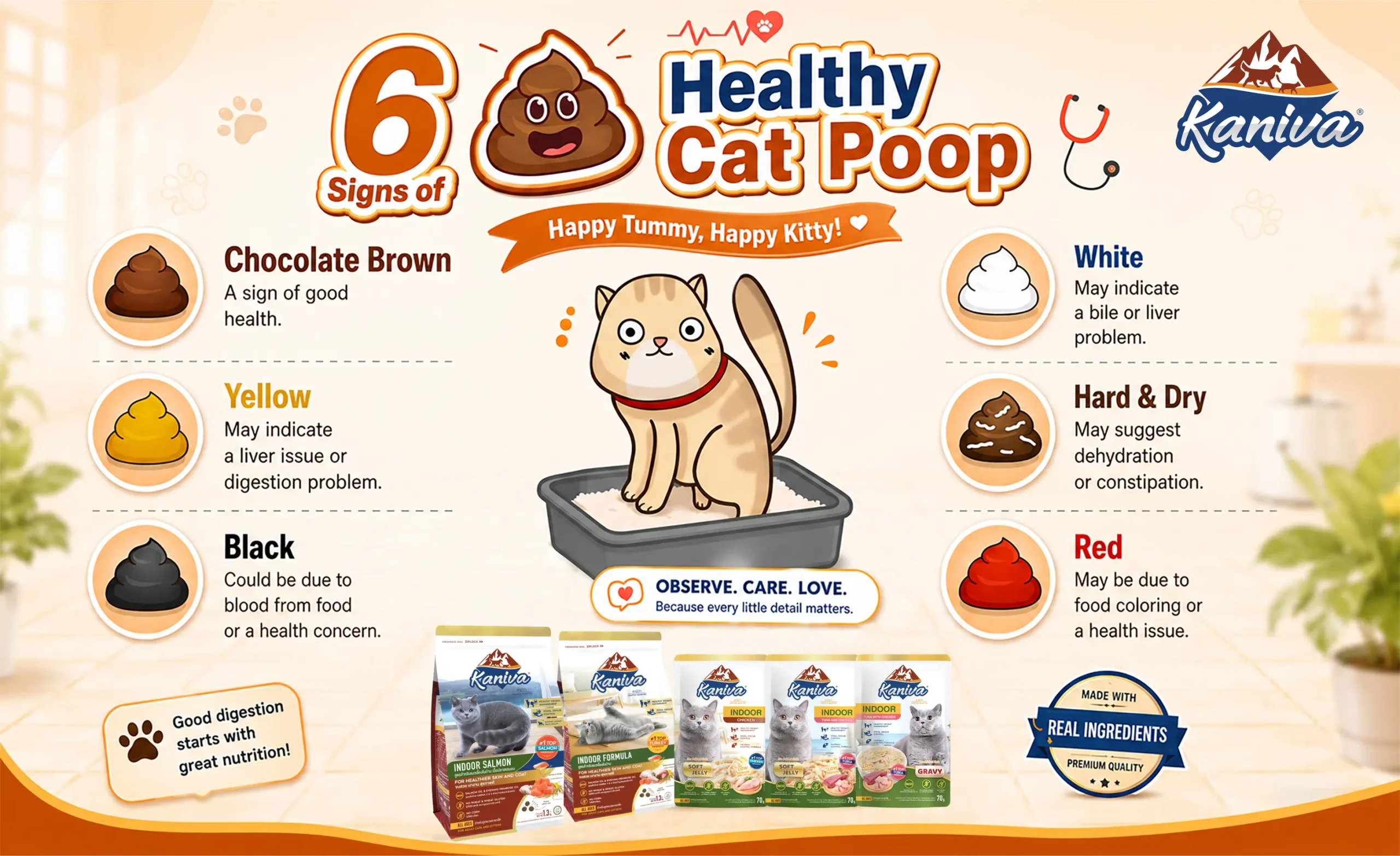
Healthy Brown Poop
A healthy cat’s stool should be medium to dark brown. This color usually indicates that your cat’s digestive system is working properly and nutrients are being absorbed efficiently.
The stool should also be well-formed, easy to scoop, and not have an unusually strong odor. If your cat’s poop suddenly changes in texture, becomes excessively smelly, or is accompanied by vomiting, poor appetite, or lethargy, it’s a good idea to consult your veterinarian.
Yellow Poop
Yellow-colored poop may indicate that food is passing through your cat’s digestive system too quickly or that there may be an issue involving the liver, gallbladder, pancreas, or intestines.
This type of stool is often seen in cats experiencing diarrhea, food sensitivities, bacterial infections, viral infections, or sudden dietary changes.
If your cat continues to pass yellow stool for more than a day or two, or develops additional symptoms such as vomiting or loss of appetite, seek veterinary advice promptly.
Black Poop
Black, shiny, or tar-like stool is one of the most serious warning signs. It may indicate bleeding in the upper digestive tract, such as the stomach or small intestine.
As blood moves through the digestive system, it becomes darker, causing the stool to appear black. Because internal bleeding can quickly become dangerous, your cat should be examined by a veterinarian as soon as possible if you notice black stool.
White or Pale Poop
White, gray, or unusually pale stool is uncommon in cats and may suggest a problem with the liver or gallbladder.
These organs produce bile, which helps digest fats and gives stool its normal brown color. If bile production is reduced or blocked, your cat’s poop may appear pale or white.
Liver disease, bile duct disorders, or other digestive conditions could be responsible, making veterinary evaluation essential.
Brownish-White Poop
Brownish-white or light gray stool can sometimes indicate digestive disturbances caused by intestinal inflammation, bacterial infections, or parasites.
Cats with these conditions may also experience loose stools, diarrhea, weight loss, or reduced appetite. Since these symptoms can have several causes, your veterinarian can perform the necessary tests to determine the correct diagnosis and treatment.
Red Poop
Bright red blood in your cat’s stool usually indicates bleeding in the lower digestive tract, such as the colon or rectum.
Possible causes include constipation, intestinal inflammation, parasites, infections, trauma, or other gastrointestinal disorders.
Although seeing blood in the litter box can be alarming, early veterinary care often leads to better treatment outcomes and helps prevent more serious complications.
When Should You Take Your Cat to the Veterinarian?
A single episode of unusual stool may not always be an emergency, but persistent changes should never be ignored.
Contact your veterinarian if your cat experiences:
- Black, red, white, or pale-colored stool
- Yellow stool that continues for more than 24–48 hours
- Persistent diarrhea or constipation
- Blood or mucus in the stool
- Vomiting
- Loss of appetite
- Lethargy or unusual behavior
Prompt diagnosis can help identify the underlying cause and improve your cat’s chances of a quick recovery.
Simple Tips to Support Your Cat’s Digestive Health
Maintaining good digestive health starts with everyday care. You can help keep your cat’s digestive system functioning properly by:
- Feeding a complete and balanced diet.
- Providing fresh, clean drinking water every day.
- Avoiding sudden changes in food whenever possible.
- Keeping up with routine deworming and veterinary checkups.
- Monitoring your cat’s litter box habits regularly.
Paying attention to your cat’s stool is one of the simplest ways to detect health issues early. The sooner you notice a problem, the sooner your veterinarian can recommend the appropriate treatment.
Support Your Cat’s Digestive Health with Kaniva Indoor Nutrition
A healthy digestive system starts with the right nutrition. Along with regular veterinary care and monitoring your cat’s litter box habits, choosing a complete and balanced diet can help support healthy digestion and overall well-being.
For indoor cats, Kaniva offers a range of carefully formulated nutrition options designed to support their everyday dietary needs. Cat parents can choose from dry and wet food options based on their cat’s age, preferences, and nutritional requirements.
Kaniva Indoor Dry Food Options
Kaniva Indoor Formula is designed for indoor cats and provides balanced daily nutrition to support their overall health and well-being.
Kaniva Grain Free Indoor Formula is another option for cat parents looking for a grain-free recipe. It is made with carefully selected ingredients and provides complete and balanced nutrition for indoor cats.
Kaniva Indoor Salmon Formula offers a salmon-based option for cats that enjoy fish-based nutrition while providing the nutrients they need as part of their daily diet.
Kaniva Indoor Wet Food Options
Adding wet food to your cat’s diet can also provide additional moisture and variety. Kaniva offers several Indoor wet food options, including:
- Kaniva Indoor Tuna & Chicken in Soft Jelly Pouch
- Kaniva Indoor Tuna & Chicken in Gravy Pouch
- Kaniva Indoor Tuna & Chicken in Soft Jelly Pouch
These wet food choices can be included as part of a balanced feeding routine, while their moisture content can also contribute to your cat’s daily water intake.
Choose the Right Nutrition for Your Cat
Every cat is different, so their nutritional needs can vary depending on their age, lifestyle, activity level, and individual sensitivities. Whether you prefer dry food, wet food, or a combination of both, choosing quality nutrition is an important part of supporting your cat’s digestive health.
Remember that food alone cannot diagnose or treat digestive problems. If you notice persistent changes in your cat’s poop color, consistency, or frequency—or symptoms such as vomiting, diarrhea, loss of appetite, or lethargy—consult your veterinarian.
With proper nutrition, fresh water, regular veterinary care, and attention to litter box habits, you can take important steps toward keeping your cat’s digestive system healthy and supporting a happier, healthier life.