Why Do Cats Purr? Understanding the Secret Behind Your Cat’s Gentle Rumble
If you’re a cat parent, you already know that cats are much more than pets—they’re family. Just like human babies, cats need love, attention, comfort, and care to feel safe and happy. Although they can’t speak our language, they have their own special ways of communicating their feelings, and one of the sweetest is purring.
Whether your cat curls up in your lap after a long day or greets you with a gentle purr, it’s their way of saying they trust you and enjoy being close to you. Understanding what your cat’s purr means can help you respond to their needs, strengthen your bond, and ensure they receive the love and care they deserve.
What Causes Cats to Purr?
A cat’s purr is produced by the rapid contraction and relaxation of muscles surrounding the voice box (larynx). These muscles vibrate as the cat breathes in and out, creating the familiar low, rhythmic sound.
Although researchers are still studying the exact biological process, experts agree that purring is a completely natural behavior—not a sign of a breathing problem or illness.
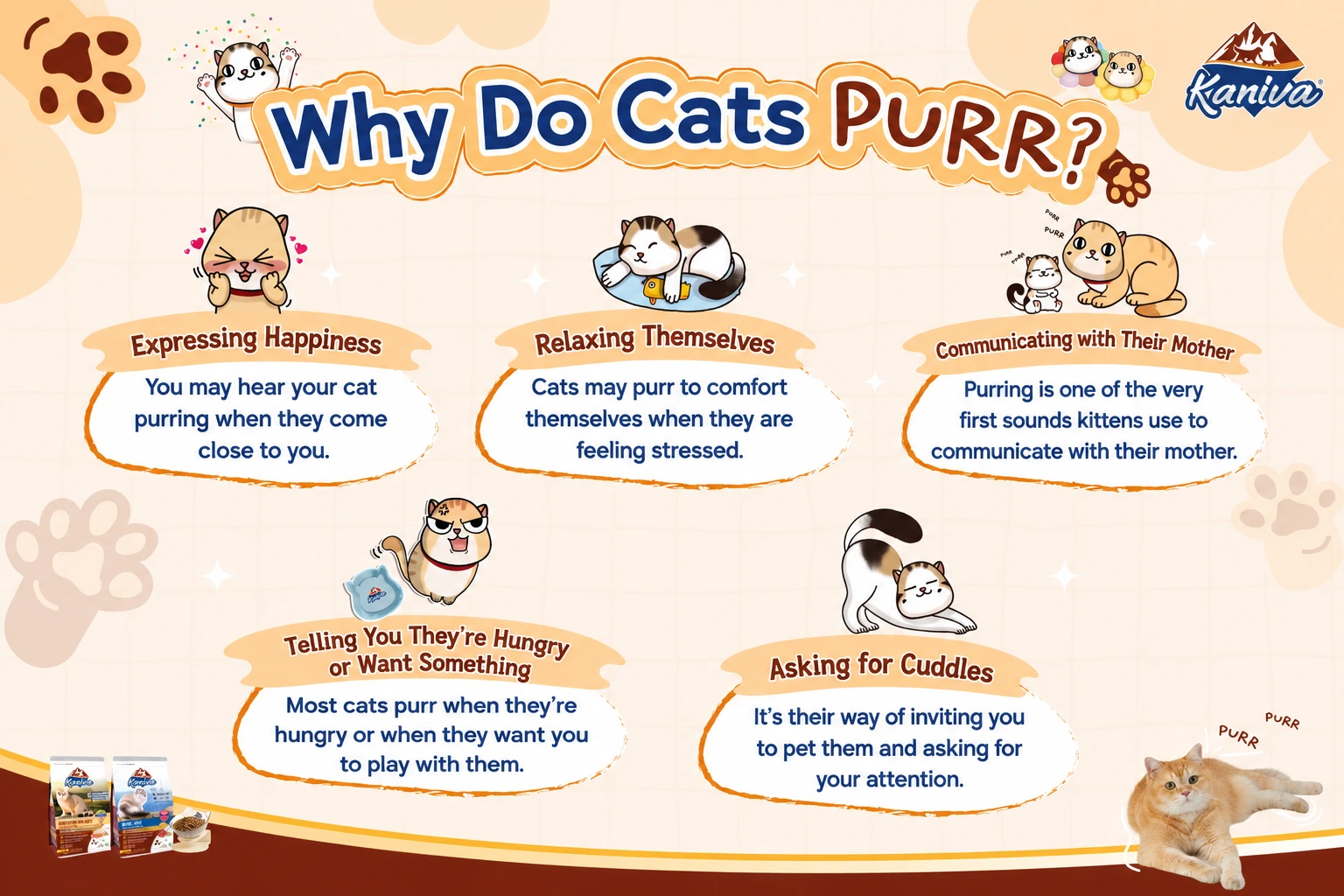
Why Do Cats Purr? 5 Common Reasons
1. Cats Purr When They Feel Happy and Comfortable
The most familiar reason for purring is contentment.
When your cat curls up beside you, closes their eyes, kneads a blanket, or enjoys gentle strokes while purring, they’re usually expressing that they feel relaxed, safe, and secure.
These moments are signs of trust and affection, making them the perfect opportunity to bond with your pet.
2. Cats Purr to Relax During Stress or Pain
Purring isn’t always a sign of happiness.
Many cats also purr when they’re frightened, injured, or feeling anxious. You may notice your cat purring during a visit to the veterinarian, after surgery, or while recovering from an illness.
Scientists believe that purring helps cats calm themselves during stressful situations. Some research also suggests that purring frequencies between 25 and 150 Hz may promote bone strength, tissue repair, and faster healing.
3. Kittens Purr to Communicate with Their Mother
Purring begins almost immediately after birth.
Newborn kittens use soft purring sounds to let their mother know they are warm, comfortable, and nursing successfully. Mother cats often respond with their own purrs, creating reassurance and strengthening the bond between them.
This early communication helps kittens feel protected during the first weeks of life.
4. Cats Purr When They’re Hungry
If your cat becomes extra vocal around mealtime, they’re probably trying to tell you something.
Many cats combine purring with meowing to grab their owner’s attention when they’re hungry. This type of purring is usually louder and more persistent than the gentle purr you hear while cuddling.
Over time, cats learn that this combination of sounds often leads to food arriving quickly.
5. Cats Purr to Ask for Attention
Sometimes your cat simply wants your company.
Whether they’re looking for affection, playtime, or a few head scratches, purring is one of the easiest ways for cats to ask for interaction.
Responding with positive attention helps build trust and creates a stronger relationship between you and your pet.
Show Your Cat Love in Ways They Understand
Cats may not express affection the same way humans do, but they form deep emotional bonds with the people they trust. In many ways, they’re like human babies—they seek comfort when they’re scared, enjoy being close to the people they love, and appreciate gentle care and attention.
When your cat curls up beside you, rubs against your legs, or purrs while sitting in your lap, they’re showing you that they feel safe and happy. Returning that affection doesn’t have to be complicated. Spending quality time together, playing with their favorite toy, grooming them, or offering a delicious, nutritious treat are all meaningful ways to strengthen your bond.
A healthy reward can make these special moments even more enjoyable. Kaniva Cat Treats are made with quality ingredients that cats love, making them a great choice for rewarding good behavior, training, or simply showing your feline friend a little extra love. After all, a happy, well-cared-for cat is more likely to return your affection with plenty of purrs.
How to Understand What Your Cat’s Purr Means
Every purr has a different meaning depending on the situation.
Watch your cat’s body language for additional clues.
Signs Your Cat Is Happy
- Relaxed body posture
- Slow blinking
- Gentle kneading
- Curled-up sleeping position
- Soft, rhythmic purring
Signs Your Cat May Be Stressed
- Flattened ears
- Tense muscles
- Hiding
- Loss of appetite
- Purring combined with unusual behavior
Looking at the complete picture—not just the sound—will help you understand how your cat is feeling.